How to Raise Rent Without Losing Tenants – 2026 Tips


Lease renewal season brings a familiar dilemma for independent landlords: property taxes, maintenance costs, and insurance premiums continue to rise, but adjusting rent carries the fear of driving away reliable renters.
While unexpected vacancies are costly — between lost income, listing fees, and applicant screening — today’s market offers reassurance. According to a recent Avail landlord survey, 36.2% of owners report tenants staying longer than in past years, compared to just 7.2% reporting shorter stays. Meaning, more and more renters prioritizing housing stability over moving.
This desire for stability gives landlords an ideal opportunity to align rent with fair market rates without losing great residents. With that said, we break down how to evaluate local rules, analyze market comps, communicate clearly, and structure retention offers to help you raise rent strategically.
When Can You Legally Raise Rent?
You can raise rent legally at the end of a fixed-term lease agreement or during a month-to-month tenancy by issuing formal advance written notice in accordance with local regulations. It is illegal to implement a price increase mid-lease unless your original agreement explicitly permits mid-term adjustments or both you and your tenant agree in writing.
| Tenancy Type | Legal Timing for Increase | Standard Advance Notice Requirement |
|---|---|---|
| Fixed-Term Lease | At lease expiration/renewal | 30 to 90 days before lease ends |
| Month-to-Month Tenancy | Any time during the tenancy | 30 to 60 days written notice |
| Rent-Controlled Units | Governed by local annual caps | Varies by local jurisdiction |
Before making any pricing changes, review local landlord-tenant laws and your current lease terms.
How to Use Rental Market Data to Justify Your Increase
Rather than focusing on rising fixed operational expenses, anchor your rent updates in local rental market trends. Investing in an Avail Rent Analysis report provides all the localized intelligence you need in one place.
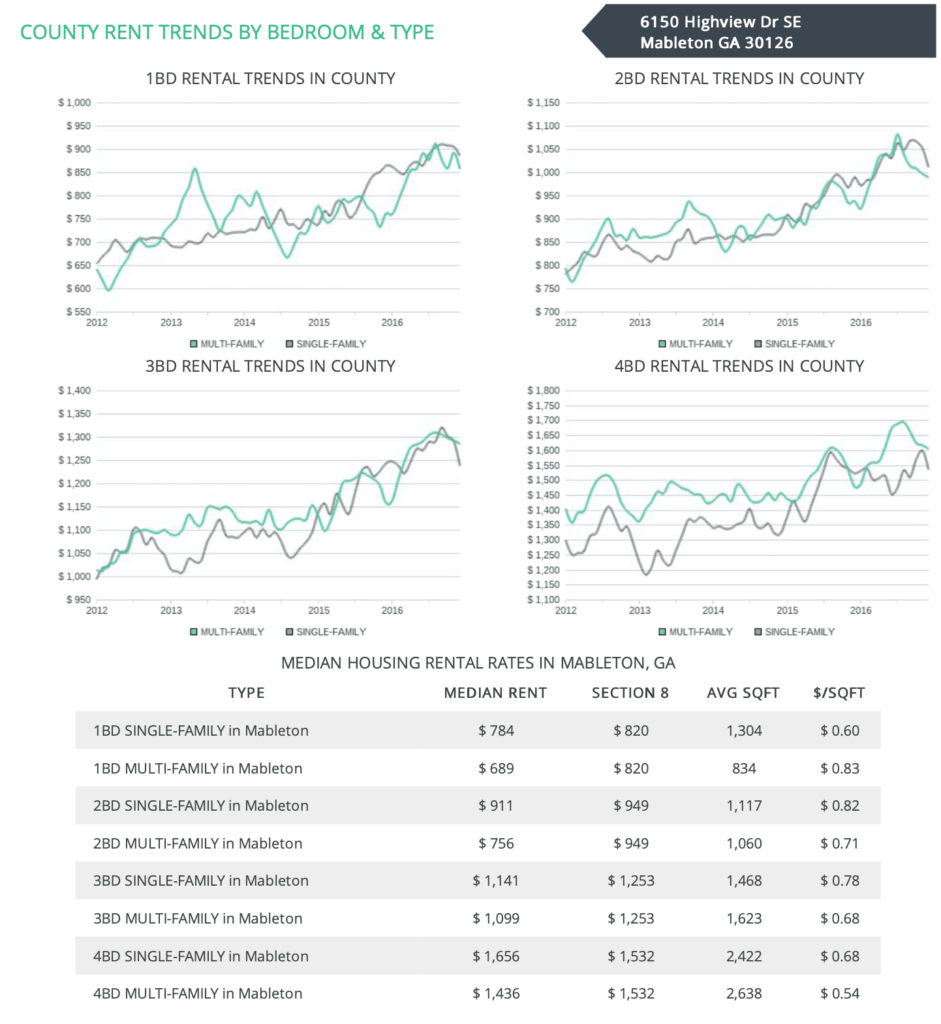
Focus on these key metrics within the report to guide your decision:
- Hyper-local comparable listings: Review active comps within a 0.5-mile radius matching your unit’s square footage, layout, and amenities to see what similar rentals are priced at.
- Historical rent benchmarks: Evaluate overall price trajectory over the past year across your immediate neighborhood to confirm broader directional trends.
- Local demand indicators: Check average days-on-market metrics to gauge tenant demand and competition in your target area.
- Rent distribution ranges: Analyze 25th, 50th, and 75th percentile market ranges to pinpoint precisely where your property fits.
By leveraging the metrics, you can confidently establish a competitive rent price that reflects true market conditions. Plus, demonstrating fair, market-backed pricing helps tenants understand the adjustment, which can reduce turnover and preserve positive relationships.
5 Tips for Communicating a Rent Increase to Tenants
Execute rent increases professionally using direct communication strategies. Follow these actionable steps when presenting price updates to your renters:
- Send early written notice (60–90 days): Provide a written rent increase notice 60 to 90 days before the current lease expires. Provide your renters ample time to adjust their household budgets without feeling rushed.
- Anchor the adjustment to property upkeep: Highlight recent property investments — such as HVAC servicing, exterior upgrades, or new appliances — to show ongoing property maintenance.
- Provide objective market evidence: Include local rental comps showing that your new rate remains competitive relative to similar properties in the area.
- Present clear action choices: Outline explicit next steps: renew at the updated rate, request custom lease options, or submit official notice of intent to vacate.
After delivering a rent increase notice, your next step is drafting a renewed lease with the revised rate or preparing to market the unit if the tenant decides to move. With Avail, you can generate state-specific, lawyer-reviewed lease agreements or upload existing templates for free digital signing.
Set a Competitive, Data-Backed Rent Price
Easily access local rental comps, market trends, rent price changes, and more with an Avail Rent Analysis report.
Get Started for FreeRent Increase Letter Template and Documentation Tips
Here is an example of a rent increase letter you can use during lease renewal season.
Rent Increase Notice Example
RENT INCREASE NOTICE
Date: [Date]
Tenant Name(s): [Tenant Name(s)]
Property Address: [Property Address]
Dear [Tenant Name(s)],
Thank you so much for taking such great care of [Property Address]. We truly appreciate having you as a tenant! This letter is to inform you that starting on [Date – e.g., November 1, 2026], the monthly rent for your unit will be adjusted from [Current Rent] to [New Rent].
This rate adjustment reflects current local rental market conditions. All other terms and conditions of your current lease agreement will remain exactly the same.
Please let us know your decision by responding to this email by [Response Deadline Date]. We look forward to continuing to have you with us!
Sincerely,
[Your Name / Property Management Name]
Common Mistakes Landlords Make When Raising Rent
Understanding and avoiding frequent operational missteps ensures a smoother lease renewal process, helps maintain steady rental income, and protects your long-term relationships with quality tenants.
Keep these key considerations in mind to make your rate adjustments effective and professional:
- Implement gradual, incremental adjustments: Consistent, small annual increases are far better accepted than sudden, large price hikes, which often prompt reliable tenants to look elsewhere.
- Weigh turnover expenses against rent gains: Always factor in potential vacancy costs, repairs, and marketing expenses, as a single vacant month can easily eliminate the financial gain of a modest rate increase.
- Rely on objective market data: Base pricing decisions on current neighborhood comps and market analysis rather than assumptions to ensure your unit stays competitively priced.
- Maintain professional open dialogue: Treat tenant feedback and inquiries as constructive business discussions, offering clarity and flexibility where appropriate.
Frequently Asked Questions: Raising Rent Without Losing Tenants
How Much Should I Raise Rent Without Losing a Good Tenant?
Aim for a modest annual rent increase between 2% and 5% when renewing leases with reliable tenants. Implement small, incremental price adjustments by leaning on local market data and evaluating how other comparable rentals are pricing themselves to avoid sudden jumps that might prompt residents to look for alternative housing.
How Much Notice Should I Give Tenants Before Raising Rent?
Provide official written notice 60 to 90 days before lease expiration, even if local regulations permit a shorter 30-day window. Deliver advance notice to give your residents sufficient time to plan household budgets or negotiate renewal terms.
What Is the Best Way to Tell a Tenant About a Rent Increase?
Deliver formal written notice 60 to 90 days in advance backed by hyper-local rental market data. Communicate transparently, document ongoing property maintenance investments, and invite open discussion regarding lease terms.
What If a Tenant Pushes Back or Complains About a Rent Increase?
Listen respectfully, review the market data driving the update, and offer flexible lease renewal options. Negotiate longer lease commitments or minor rate adjustments to avoid the far higher cost of property turnover.
If you choose not to reduce the rent rate, that is completely fine — while you may lose the current tenant, having sophisticated tenant screening in place ensures you can find another qualified resident.
Should I Offer a Longer Lease Instead of Raising Rent by a Large Amount?
Yes, offering an 18- or 24-month lease renewal at a slightly lower or moderate adjustment rate can be an effective strategy for both landlords and tenants. For landlords, longer lease terms lock in consistent cash flow, eliminate the risk of mid-year vacancies, and avoid expensive annual turnover costs—such as marketing, cleaning, repairs, and tenant screening fees—which can quickly wipe out the gains from a higher rent increase.
For renters, multi-year commitments offer long-term housing stability and payment predictability, protecting them against sharp annual rate hikes.
Can Small Upgrades or Perks Help Justify a Rent Increase to Tenants?
Yes, pair rate updates with tangible property enhancements, such as fresh interior paint, updated fixtures, or professional carpet cleaning. Complete small upgrades to show residents that their rent payments directly maintain their living space.
What Should I Do If My Rental Is Already Priced Below Market Rate?
Execute a multi-year catch-up plan using gradual annual increases rather than raising rates to market value instantly. Apply stepped adjustments to protect tenant retention while steadily bringing your rental asset up to its full income potential.
Set the Right Rent Price With Avail’s Rent Analysis Tools
Determining the optimal rent price manually can take hours of painstaking research across multiple listing sites, often yielding incomplete or outdated comps. The Avail Rent Analysis report eliminates this tedious work by delivering precise, hyper-local market intelligence directly to you in minutes, saving you valuable time while ensuring high data accuracy.
Purchasing an Avail Rent Analysis report gives you instant access to comprehensive neighborhood insights, active rental comps, historic rent trends, and local demand indicators all consolidated in one clear place. Leverage reliable, objective data to confidently justify rate adjustments, protect your rental yields, and streamline lease renewals while retaining quality tenants.
Eliminate guesswork from your pricing strategy. Create an account to get started.
- Advertise your rental online
- Collect rent online and more
- Access lawyer-reviewed lease agreements