2026 Independent Landlord Survey: Key Rental Market Trends


Institutional real estate often dominates the headlines, yet the independent landlord sector remains the true bedrock of the American housing market. To capture the operational realities of rental property management during a period of significant economic flux, we conducted an online study of 4,055 landlords.
The results reveal a sector defined by a unique brand of resilience that is increasingly prioritizing long-term stability over short-term margin expansion. By acting as a vital buffer for the rental market, these individuals often absorb substantial financial pressure to maintain the health and longevity of their tenant relationships.
Key Survey Insights at a Glance
- 74.4% of landlords saw property ownership costs rise this year
- 18.0% maintain a strict policy of avoiding regular rent increases
- Tenants are staying put longer, with retention outperforming turnover 5-to-1
- 78.3% of landlords choose communication and payment plans over legal action
- Nearly 1 in 3 landlords intend to expand their portfolios in the next 24 months
Absorbing the Cost of Inflation
Economic standard practice suggests that rising expenses eventually fall on the consumer. However, the 2026 survey data show independent landlords are currently defying this trend.
Property ownership costs, driven primarily by taxes and insurance, increased for 74.4% of landlords this year. Despite this, only 44.3% of those who did increase rent cited those rising operating costs as the primary driver.
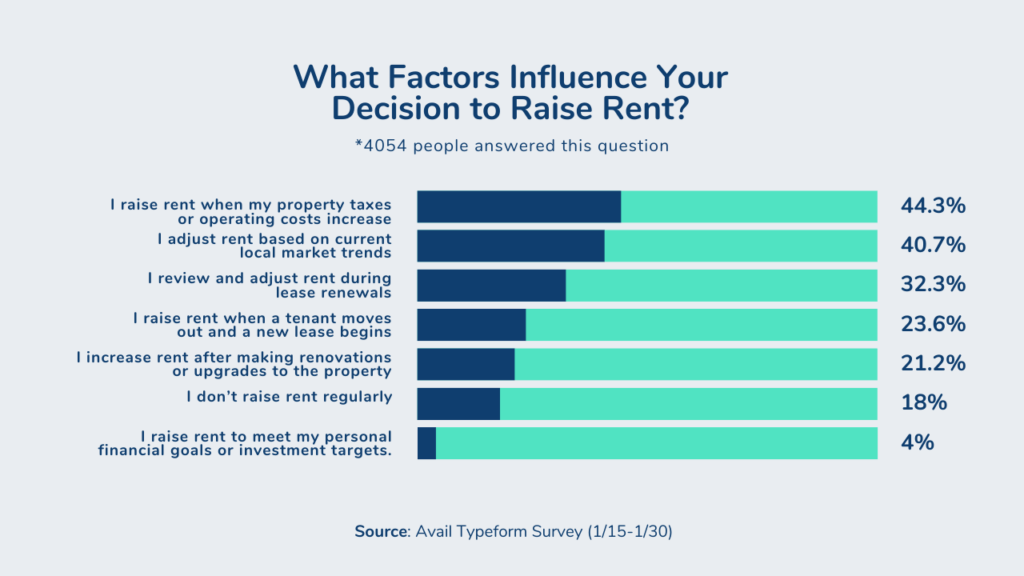
In a notable display of stewardship, 18.0% of respondents have committed to a no-increase policy. For these providers, the stability of a reliable tenant is more valuable than the marginal gain of a market-rate hike.
Why Tenants Are Staying Put
The rental market is undergoing a structural shift in the duration of tenancy. According to our findings, 36.1% of landlords report that their tenants are staying in their properties longer than in previous years — nearly five times the number of those reporting shorter stays.
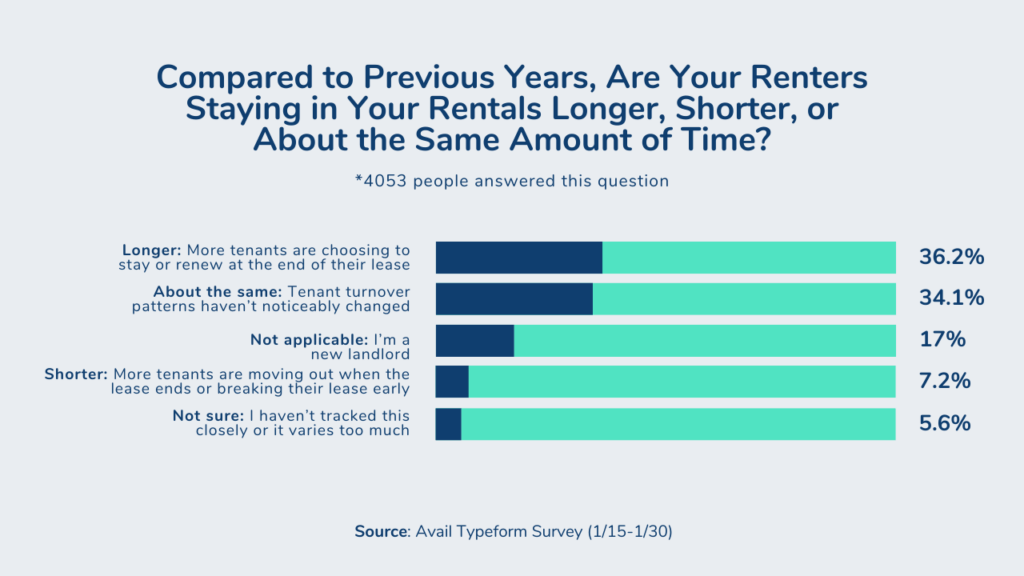
This trend likely stems from a locked-in housing market. As the path to homeownership becomes more difficult to navigate, independent rentals are transitioning from temporary stops into long-term homes. Consequently, the landlord’s role is evolving; success is now measured less by filling vacancies and more by the multi-year care of a lived-in property.
Dialogue Over Litigation
Independent landlords overwhelmingly prefer collaborative conflict resolution. When a payment is missed, only 0.81% of respondents initiate an eviction as their first response.
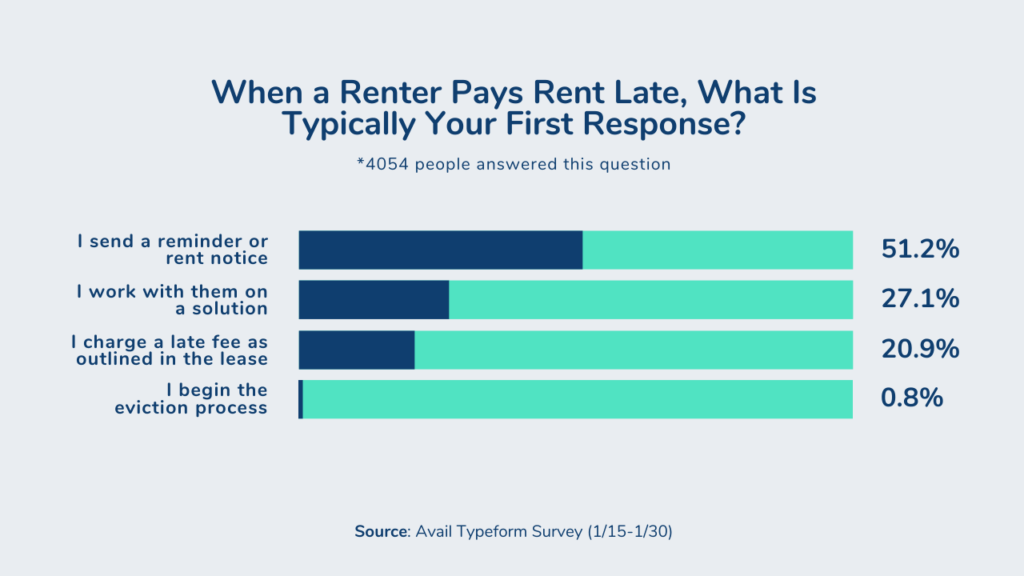
The vast majority (78.3%) focus on human-centered solutions like simple text reminders or collaborative payment plans. This commitment to mutual success is evidenced by an average relationship satisfaction score of 4.15 out of 5.
The Technology Equalizer
For the modern housing provider, technology has become an essential tool for professionalization. With 47.4% of respondents having managed properties for three years or less, this new class of landlords is turning to digital solutions to bridge the experience gap and manage their properties with greater confidence.
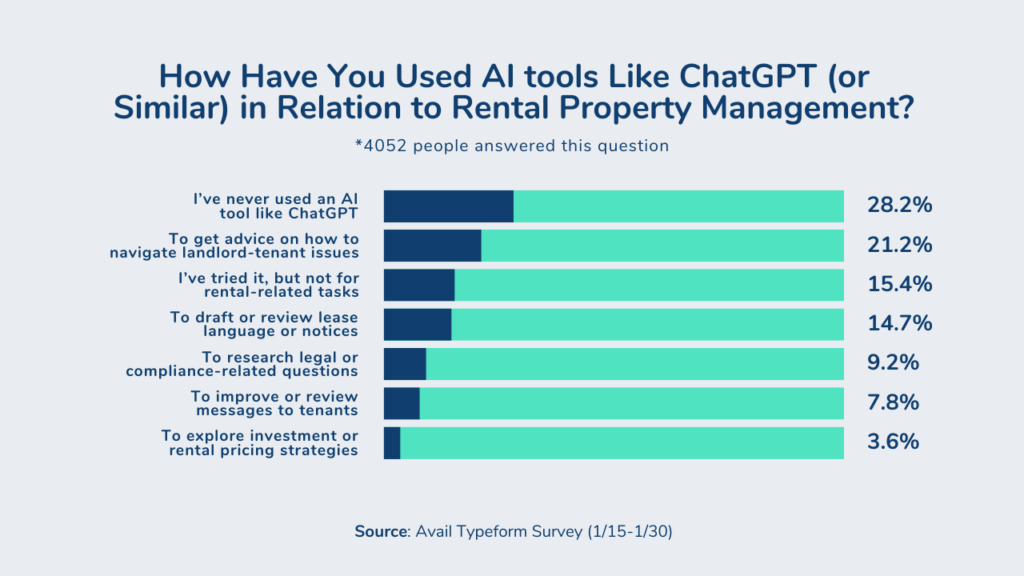
Artificial Intelligence (AI) has reached a significant milestone in this sector, with 75.7% of landlords either currently using or open to the technology. Rather than using it for general tasks, independent providers are leaning on AI to handle the most complex and time-consuming aspects of property management.
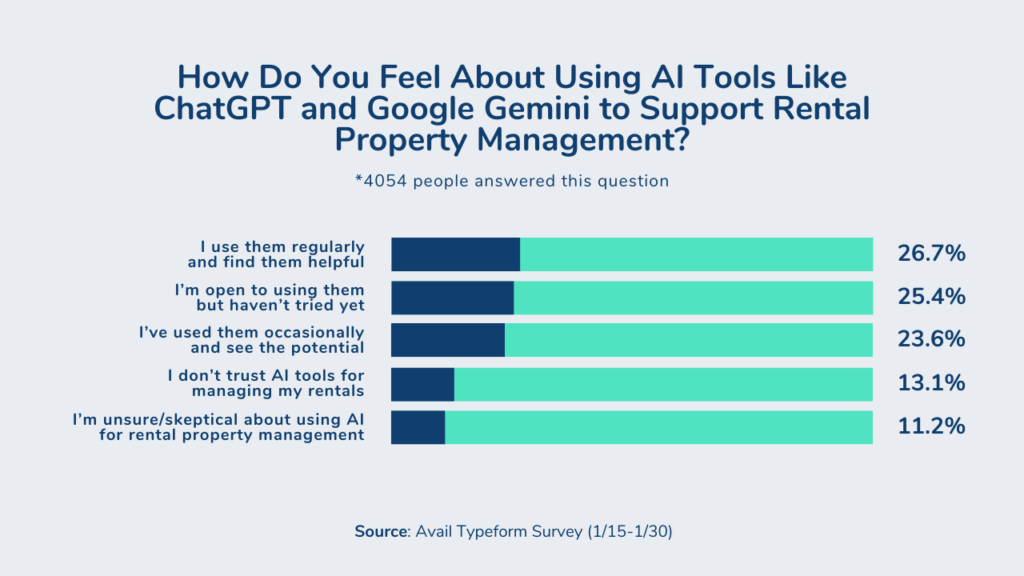
The data show that landlords are primarily utilizing AI as a specialized consultant. The most common application is navigating complex landlord-tenant issues and local rules (21.2%), followed closely by using AI to draft legal notices or lease language (14.7%).
Beyond compliance, landlords are leveraging these tools to enhance their marketing, with 11.2% using AI to write property descriptions.
Despite this high level of tech literacy an operational divide remains in the physical management of the home.
While 65.2% of landlords use digital tools for tenant screening, only 16.2% have transitioned to digital systems for tracking maintenance and repairs. This suggests that while landlords are quick to adopt “intellectual” technology for legal and communication tasks, the “on-site” aspects of landlording remain the final frontier for digital transformation.
Resilient Investment Sentiment
Landlord behavior is currently outperforming market sentiment. Although only 14.6% of landlords describe the current economy as “Very Favorable,” their desire to grow remains remarkably firm.
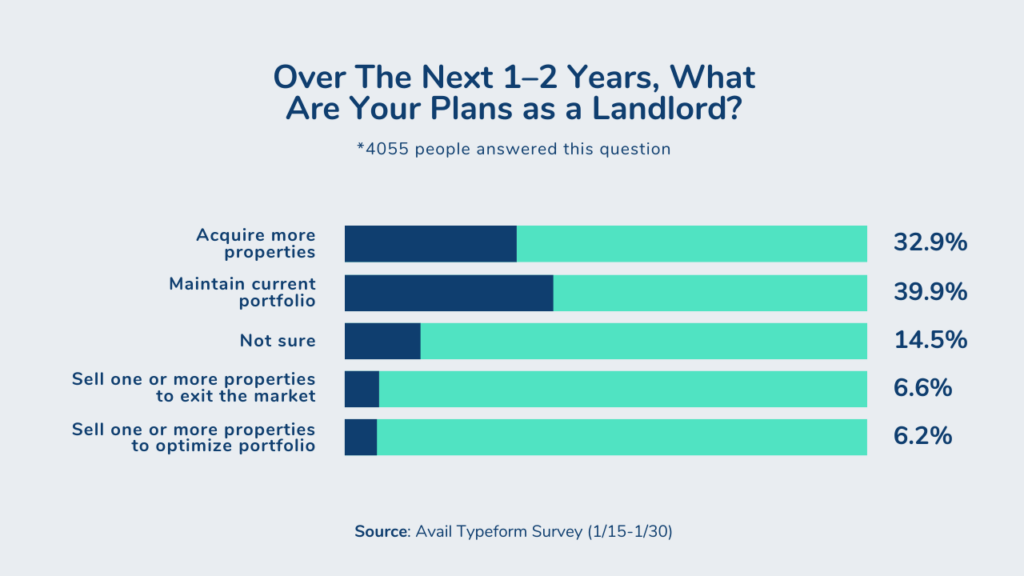
Currently, 32.9% of landlords plan to acquire additional property in the next two years, while only 6.6% intend to exit the market. This suggests that independent landlords are looking past short-term volatility, viewing real estate as a reliable vehicle for retirement and long-term security.
2026 Industry Benchmarks: Operational Standards
To provide a deeper look at the independent sector’s standards, we have synthesized the metrics that define how these 4,055 providers operate.
Landlord Experience and Motivation
- The New Class: 47.4% of landlords have managed properties for three years or less, signaling a significant influx of newer rental property owners into the industry.
- Core Objectives: 76.9% of respondents are motivated by long-term financial security, primarily building passive income for retirement.
- Portfolio Size: Most independent inventory is managed on a small scale, with 72.6% of landlords overseeing between 1 and 4 units.
Tenant Vetting and Relationships
- The Credit Standard: 88.4% of landlords rank credit scores as the most essential screening factor, followed closely by income verification.
- Relationship Quality: Personal connections remain a priority, as evidenced by an average relationship satisfaction score of 4.15 out of 5.
- Financial Reporting: 39.8% of housing providers are interested in tools that report on-time rent payments to help tenants build credit.
Operational Preferences
- Peak Activity: The second quarter (April–June) remains the most active period, accounting for 42.3% of all application volume.
- Communication: 58.7% of landlords prefer text messaging for daily interactions, while email (25.2%) and phone calls (14.2%) serve as secondary channels.
- Digital Gap: While 65.2% of landlords have digitized the screening process, only 16.2% use software for maintenance tracking, showing that physical upkeep remains largely manual.
Financial and Market Sentiment
- Cost Sensitivity: 29.2% of landlords describe recent cost increases as “significant,” yet most remain committed to their properties.
- Policy Risk: 48.6% of respondents cite legislative and policy changes as their top concern for the next two years.
- Acquisition Intent: Despite market uncertainty, 32.9% of landlords plan to buy more property, significantly outnumbering the 6.6% who plan to sell.
Join the New Standard of Independent Management
The 2026 survey highlights a clear shift: today’s landlords are more tech-forward, more collaborative, and more focused on long-term stability than ever before. Whether you are part of the new generation of owners or a seasoned investor, the right property management tools can help you automate relevant tasks, set your landlord-tenant relationships up for success, and improve your overall process to encourage increased lease renewals.
Avail provides a complete suite of tools built specifically for independent landlords, covering every stage of the rental lifecycle — from finding and vetting the right tenants with comprehensive screening to collecting rent and tracking maintenance.
To support the growing trend of digital-first interactions, we’ve also introduced Avail Messages, which allows landlords to easily communicate with tenants while keeping their business and personal lives organized and separate.
Ready to ride the tech wave and make landlording easier? Create an account today to get started.
- Advertise your rental online
- Collect rent online and more
- Access lawyer-reviewed lease agreements