Average Rent Increase Per Year: 2026 Rent Trends to Consider

As a landlord, you’ll need to regularly adjust your rent price to remain competitive and cover the rising costs of property ownership. However, doing this is much more than picking a random number that feels right — the process requires careful research, auditing your financials, and understanding local demand.
With that being considered, we outline everything to know about setting a rent price and the average rent increase per year for popular areas across the country.
When Can a Landlord Raise Rent?
Landlords can raise rent when renewing a lease, transitioning to a month-to-month agreement, or listing a unit for a new tenant. However, some states have rent increase limitations, particularly for tenants receiving housing assistance or Section 8 vouchers, which may impact how much you can adjust rent.
Many states also require landlords to provide a Rent Increase Notice, outlining the new rental rate and when it takes effect. For month-to-month leases, most states require at least 30 days’ written notice, though some may require 60 days or more. For fixed-term leases, landlords generally cannot raise rent until the lease expires, unless the lease agreement allows it or the tenant agrees to the change.
To ensure compliance, landlords should review local landlord-tenant laws before making any rent adjustments, as some states and cities also have rent control regulations that may impose further restrictions on how often and by how much rent can increase.
When Can’t a Landlord Raise Rent?
Depending on the state and when you want to raise rent, there may be instances where you cannot. Examples of scenarios that do not allow landlords to raise rent are the following:
- The new rent price would exceed the threshold listed in rent control laws for your state
- An existing fixed-term lease has not expired
- You did not provide a Rent Increase Notice when presenting lease renewal options
- Your lease agreement states the rent price will not increase if renewed for another term
- Your property is considered a rent-controlled property
- The rent increase is in retaliation to your tenant
- The rent increase is construed as discriminatory and violates the Fair Housing Act
How Much Can Rent Be Raised Each Year?
The amount you can increase rent each year depends heavily on your state and local rent control ordinances, so always consult your local landlord-tenant laws first.
In most markets, landlords typically adjust rent by 5% to 15%, depending on whether a new tenant is moving in or an existing resident is renewing. However, despite a volatile economy, many are hesitant to immediately raise prices.
Our 2026 Independent Landlord Survey reveals a complex balancing act between rising expenses and tenant retention:
- The cost-rent gap: While a staggering 74.4% of landlords reported that their property ownership costs (taxes, insurance, and utilities) increased over the last year, many are absorbing those costs rather than passing them entirely to the tenant.
- Retention over revenue: Nearly 1 in 5 landlords (18.0%) maintain a strict policy of not raising rent regularly, prioritizing long-term stability over incremental profit.
- Strategic increases: For the landlords who did choose to raise rent this year, less than half (44.3%) cited rising ownership costs as the primary reason. Most instead pointed to keeping pace with local market comps to ensure their investment remained viable.
If your property is already priced at or above market value based on location and amenities, keeping your rent stable can be a powerful tool for retention.
Given that lease renewals are currently outpacing move-outs by a 5-to-1 ratio, maintaining a fair price point is often the most effective way to protect your ROI by avoiding the high costs of a vacancy.
Rent Trends for the 50 Largest Metropolitan Areas
Below is the latest median rent for studios to two-bedroom properties for the 50 largest metropolitan areas based on the Realtor.com February 2026 Rent Report.
| Metro Area | Median Rent (0-2 Bedrooms) | YoY Change |
|---|---|---|
| Atlanta-Sandy Springs-Roswell, GA | $1,543 | -2.00% |
| Austin-Round Rock-San Marcos, TX | $1,357 | -7.10% |
| Baltimore-Columbia-Towson, MD | $1,810 | 0.80% |
| Birmingham, AL | $1,125 | -3.40% |
| Boston-Cambridge-Newton, MA-NH | $2,841 | -3.30% |
| Charlotte-Concord-Gastonia, NC-SC | $1,479 | -2.80% |
| Chicago-Naperville-Elgin, IL-IN | $1,794 | -0.20% |
| Cincinnati, OH-KY-IN | $1,268 | -2.00% |
| Cleveland-Elyria, OH | $1,209 | -0.70% |
| Columbus, OH | $1,190 | -0.50% |
| Dallas-Fort Worth-Arlington, TX | $1,408 | -3.70% |
| Denver-Aurora-Centennial, CO | $1,720 | -4.20% |
| Detroit-Warren-Dearborn, MI | $1,277 | -3.50% |
| Houston-Pasadena-The Woodlands, TX | $1,344 | -2.40% |
| Indianapolis-Carmel-Greenwood, IN | $1,281 | -0.20% |
| Jacksonville, FL | $1,456 | -3.40% |
| Kansas City, MO-KS | $1,387 | 1.00% |
| Las Vegas-Henderson-North Las Vegas, NV | $1,423 | -1.80% |
| Los Angeles-Long Beach-Anaheim, CA | $2,709 | -1.90% |
| Louisville/Jefferson County, KY-IN | $1,210 | -2.20% |
| Memphis, TN-MS-AR | $1,140 | -3.80% |
| Miami-Fort Lauderdale-West Palm Beach, FL | $2,235 | -3.30% |
| Milwaukee-Waukesha, WI | $1,639 | -0.10% |
| Minneapolis-St. Paul-Bloomington, MN-WI | $1,482 | -1.20% |
| Nashville-Davidson–Murfreesboro–Franklin, TN | $1,457 | -4.50% |
| New York-Newark-Jersey City, NY-NJ | $2,894 | 0.80% |
| Oklahoma City, OK | $983 | -1.20% |
| Orlando-Kissimmee-Sanford, FL | $1,636 | -2.20% |
| Philadelphia-Camden-Wilmington, PA-NJ-DE-MD | $1,713 | -2.60% |
| Phoenix-Mesa-Chandler, AZ | $1,427 | -4.40% |
| Pittsburgh, PA | $1,426 | 0.40% |
| Portland-Vancouver-Hillsboro, OR-WA | $1,629 | -1.20% |
| Raleigh-Cary, NC | $1,437 | -1.50% |
| Richmond, VA | $1,507 | 2.00% |
| Riverside-San Bernardino-Ontario, CA | $2,059 | -3.30% |
| Sacramento-Roseville-Folsom, CA | $1,823 | -1.90% |
| San Antonio-New Braunfels, TX | $1,188 | -4.00% |
| San Diego-Chula Vista-Carlsbad, CA | $2,626 | -3.70% |
| San Francisco-Oakland-Fremont, CA | $2,768 | 0.90% |
| San Jose-Sunnyvale-Santa Clara, CA | $3,331 | 1.80% |
| Seattle-Tacoma-Bellevue, WA | $1,905 | -1.90% |
| St. Louis, MO-IL | $1,280 | -1.80% |
| Tampa-St. Petersburg-Clearwater, FL | $1,675 | -3.70% |
| Virginia Beach-Chesapeake-Norfolk, VA-NC | $1,620 | 4.50% |
| Washington-Arlington-Alexandria, DC-VA-MD-WV | $2,266 | -0.70% |
What to Expect Regarding Rent Trends
February 2026 marks a four-year low for national median asking rents, representing the 30th consecutive month of year-over-year decline for 0-2 bedroom properties across the 50 largest metros.
The national median asking rent fell $29, or 1.7%, compared to a year ago, settling at $1,667. While this is $90 (-5.1%) lower than the summer 2022 peak, it remains $207 (14.2%) higher than pre-pandemic levels.
This downward trend is visible across all unit sizes:
- Studio apartments: $1,393 (down $6, or -0.4% YoY)
- 1-bedroom units: $1,548 (down $28, or -1.5% YoY)
- 2-bedroom units: $1,844 (down $35, or -1.9% YoY)
In February 2026, median asking rents in all 50 metros remained below their peak levels, though the depth of that “rent relief” varies by region. Fifteen markets saw rents at least 10% below their peaks, led by Austin, TX (-18.2%), Birmingham, AL (-17.1%), and Memphis, TN (-16.1%). Conversely, five markets are showing signs of a potential rebound, with asking rents sitting within 3% of their all-time peaks: Virginia Beach, VA (-1.7%), Kansas City, MO (-1.8%), Baltimore, MD (-2.4%), San Jose, CA (-2.5%), and Richmond, VA (-2.7%).
For landlords in “rebound” markets, there may soon be room for modest rent adjustments to offset rising ownership costs. In markets seeing double-digit relief from peaks, prioritizing tenant retention is critical.
How to Determine New Rent Price for Your Rental
If your state allows for rent adjustments without heavy restrictions, the next step is determining a price that balances your financial goals with market reality.
Follow these three steps to guide your process:
1. Conduct a Comparative Market Analysis (CMA)
Rather than basing your rent solely on your mortgage or operating expenses, you must look at what similar properties in your immediate area are actually commanding.
The amount you need to break even is important for your personal math, but the market price is dictated by supply and demand.
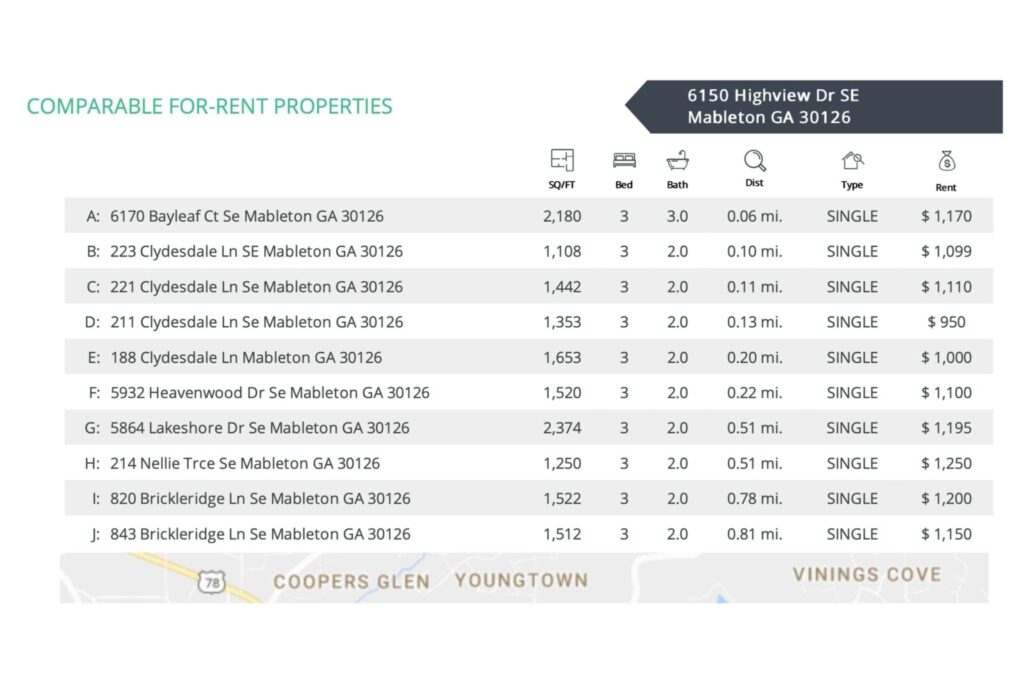
- Identify rental comps: Look for three to five rental properties within a half-mile radius that match your square footage, bedroom/bathroom count, and finish level.
- Adjust for amenities: Does your unit have in-unit laundry, a private outdoor space, or proximity to transit that the comps lack? If so, adjust your price upward for these value-adds or downward if your unit lacks standard neighborhood features.
- Check “days on market” stats: If similar units are sitting vacant for 30+ days, it’s a sign that the current market price might be slightly too high for local demand.
2. Factor in the “New Guard” Market Dynamics
The rental landscape has shifted toward long-term stability. When pricing your unit, you must weigh the benefit of a high rent price against the devastating cost of a vacancy.
- The vacancy math: Increasing rent by $100/month nets you $1,200 a year. However, if that increase causes a 30-day vacancy while you search for a new tenant, you could lose $1,667 (the national median) in a single month.
- Retention pricing: In a cooling market where national rents have declined for 30 consecutive months, offering a “renewal rate” that is slightly below the price for a new lease is a proven strategy to keep high-quality tenants and maintain a consistent cash flow.
3. Research Local Rental Comps
Researching local rental comps can help you see what other landlords charge for similar properties. You can manually search apartment-hunting websites to go through individual rental listings or invest in the Avail Rent Analysis report to get comprehensive insights on local rent comps, rental benchmarks, rent trends, and more in minutes.
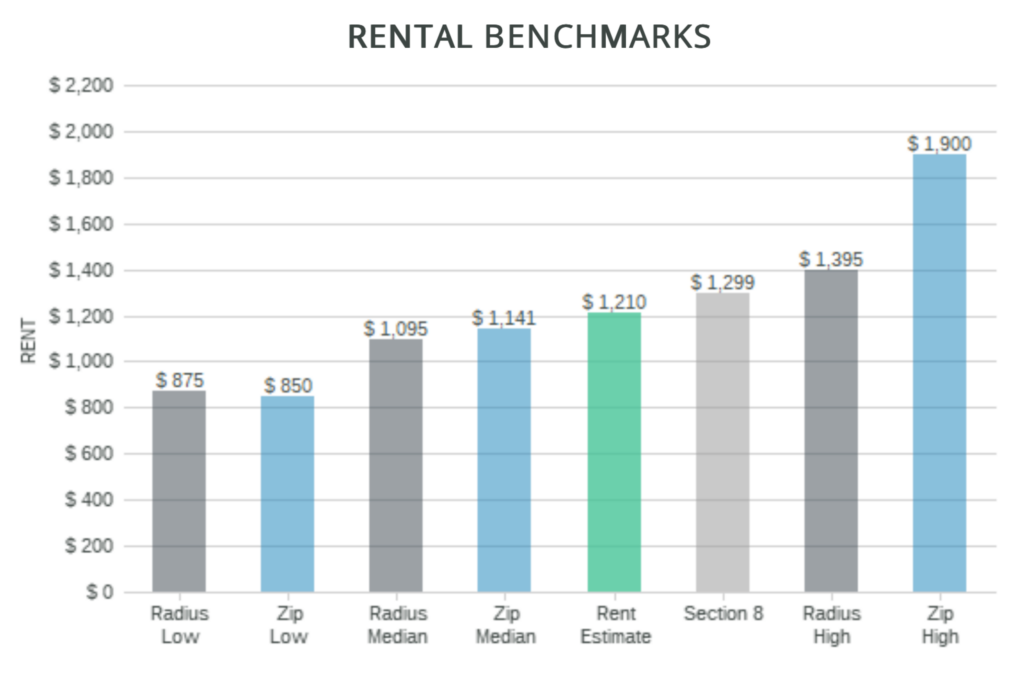
Seeing what other landlords are charging can provide a benchmark for the average rent price for similar properties. You can then decide whether to charge more or less than the average rent price, depending on what you think is best.
Set a Competitive Rent Price in Minutes
Get local rental comps, market trends, rent price changes, and more with an Avail Rent Analysis report.
Get Started for FreeWhat Notice Is Required for Rent Price Increases?
In most states, landlords must provide a 30 to 60-day written notice before a rent increase can take effect. This formal document is commonly known as a Rent Increase Notice (or a Notice of Rent Increase).
Failure to provide the correct notice within the required timeframe can make the increase unenforceable and lead to complications in housing court. Always consult your local landlord-tenant laws to confirm the exact notice period required for your property.
How to Properly Communicate Rent Increases
Follow these steps to communicate a rent price change effectively:
- Issue a formal Rent Increase Notice: This document should be delivered in writing and must include the current rent, the new rent amount, and the exact date the increase takes effect.
- Adhere to legal timelines: Depending on your state, you must provide this notice 30, 60, or 90 days in advance. Failing to provide notice within the legally required timeframe can void the increase and lead to documentation gaps in your records.
- Prioritize professional delivery: While 58.7% of landlords in our 2026 survey prefer to use text messaging, a text is rarely a legally sufficient substitute for a formal notice. Use a method that provides proof of delivery, such as certified mail or a professional property management platform like Avail, which generates a time-stamped digital record.
- Send a courtesy follow-up: In addition to the formal notice, reaching out directly via email or a phone call can help maintain the high relationship satisfaction scores reported by many independent providers (averaging 4.15/5).
What to Do If Tenant Negotiates New Rent Price
It’s common for tenants to negotiate the new rent price, especially if they hope to renew the lease for another term. It’s your decision whether or not the price can be negotiated, but allowing tenants to negotiate can establish good landlord-tenant relationships and result in an agreement both parties are happy with.
However, if you do not want to alter the new rent price, the tenants must notify you if they accept it or plan to move out once the lease expires.
Make Informed Decisions With Avail
Setting the right rent price is key to maximizing your rental income while staying competitive in the market. With local landlord-tenant laws, rental comps, and market trends constantly shifting, having access to accurate, up-to-date data ensures you’re making informed decisions.
With an Avail Rent Analysis report, you can see real-time rental comps in your area, helping you determine a fair and competitive rent price. Plus, with online rent collection tools, you can simplify payments while ensuring compliance with local regulations.
Create an account today to purchase a Rent Analysis report for your rentals and collect online rent payments with Avail.
- Advertise your rental online
- Collect rent online and more
- Access lawyer-reviewed lease agreements