How Tenant Longevity Is Redefining Rental Property Maintenance

The traditional turnover cycle is entering a period of significant transition. The rental market has long been defined by its volatility, but the modern housing landscape is beginning to favor stability.
According to our latest survey, landlords are seeing their properties transition from temporary stops into long-term homes, as renters choose to stay put for consecutive years. While this does guarantee consistent rental income, the longer tenancies can also result in problems that can influence the way maintenance tracking is handled.
Here are five actionable strategies to help you protect your investment when the traditional window between tenancies disappears.
What the Data Shows: A Growing Trend Toward Stability
Over the past 12 months, 55.9% of landlords reported that their tenants didn’t move at all and instead opted to stay put. In fact, 36.2% of landlords have seen a measurable increase in tenants choosing to renew their leases — a trend that is currently outpacing those reporting shorter stays by a 5-to-1 ratio.
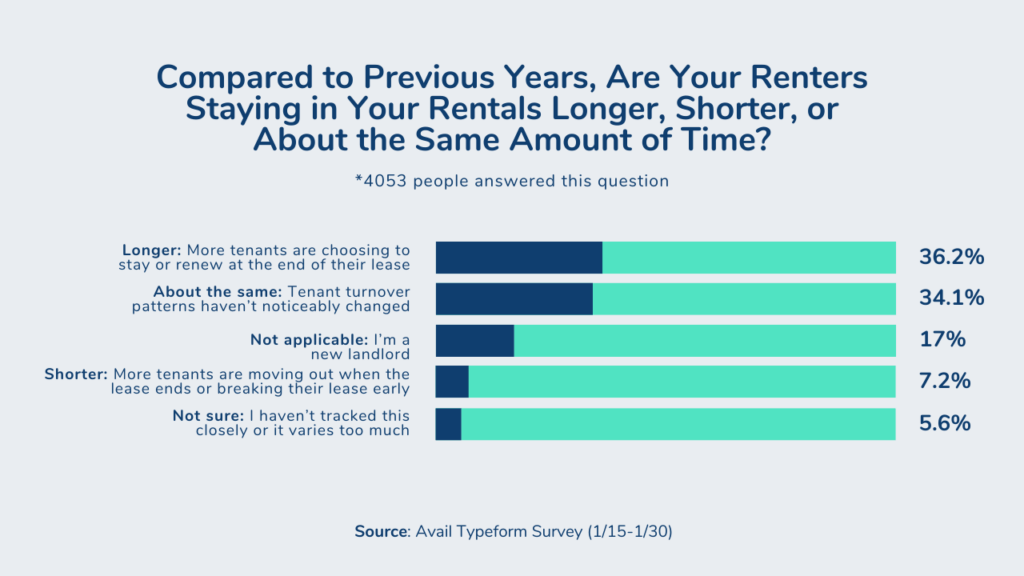
The empty window once used for property repairs and necessary maintenance is disappearing, requiring the necessary move from filling vacancies to maintaining the value and functionality of occupied assets.
How to Take Care of Your Rental With Long-Term Tenants
Below we cover how to take care of your rental property when tenants stay long term.
1. Establish a Depreciation Budget Based on Useful Life
To avoid disputes over security deposits, you must understand “useful life” — the industry-standard timeline for how long property components are expected to last. In a long-term tenancy, you are financially responsible for the natural expiration of these items.
A depreciation budget requires calculating the annual cost of wear for major finishes to avoid a massive bill at move-out. This essentially creates a “sinking fund” that ensures you aren’t paying for years of usage out of a single month’s rent.
Here are a few examples:
- Interior Paint (Useful life: 3 years): If a full repaint costs $1,200, budget $400/year.
- Carpet (Useful life: 5 years): If replacement costs $2,500, budget $500/year.
- Appliances (Useful life: 10 years): If a fridge costs $1,000, budget $100/year.
Setting aside these small amounts ensures you can comfortably afford the future maintenance and repair costs to keep the rental property in top condition. This financial discipline also prevents deferred maintenance, which is the leading cause of property devaluation over a ten-year span.
2. Plan for Incremental Renovations
When a tenant stays for two or five years, you cannot wait for a vacancy to renovate the property. Instead, shift from total overhauls to incremental modernizations to improve the asset’s value without making the home uninhabitable for your renter.
Here are examples of a few strategies:
- Categorize by impact: Focus on low-impact upgrades that can be done in an hour, such as swapping out old plastic outlet covers for modern screwless versions, installing smart thermostats, or updating kitchen cabinet hardware.
- The incentivized renewal: Use renovations as a retention tool. If a tenant is considering a move, offer to upgrade to stainless steel appliances or install new quartz countertops upon a two-year lease renewal.
- The Zoned approach: Rather than repainting the entire home at once, offer to refresh one or two high-traffic rooms every few years. This keeps the unit feeling new without requiring the tenant to move all their furniture at once or live in a construction zone for a week.
3. Update Lease Agreements During Renewals
A lease renewal is your best opportunity to protect the property for the next term. Before a tenant signs a new lease, conduct a formal check-in to account for any lifestyle changes that may have occurred since the initial move-in.
If a renter plans to get a new pet or bring in a new roommate, these must be formally added to the new lease agreement. This ensures that your pet policies are followed, additional security deposits are collected if necessary, and every adult living in the unit has passed your screening process and is legally bound to the lease terms.
Furthermore, use the renewal window to update your “House Rules” or “Maintenance Addendum” if you’ve adopted new technology, like a smart leak-detection system, that requires tenant cooperation.
Create and Sign State-Specific Rental Lease Agreements for Free
Build locally-compliant rental lease agreements or upload your existing lease to sign online at no additional cost.
Get Started for Free4. Prevent Damage with Annual Safety Walkthroughs
The greatest threat to a long-term investment is the unreported minor issue. Because long-term tenants often stop noticing gradual changes like a soft spot in the floor or a faint water stain on the ceiling, you must move from reactive repairs to annual walkthroughs.
Frame this as a service aimed at ensuring the home remains safe, efficient, and comfortable. During the walkthrough, focus on high-moisture zones like the laundry room and bathrooms. Check the supply lines under every sink and inspect the water heater for signs of corrosion or “slow weeping.”
Catching these silent issues annually prevents them from becoming multi-thousand-dollar remediation projects that involve mold or structural rot when the tenant eventually moves out.
5. Leverage Long-Term Financial Reserves
In the independent sector, landlords often view their properties as retirement vehicles. To ensure that a decade of residency doesn’t result in a decade of “wear,” you should re-evaluate your insurance coverage and reserve funds every 24 months.
Inflation impacts the cost of labor and materials; the $1,500 you saved for a roof repair five years ago likely won’t cover the same scope today. As part of your long-term maintenance strategy, ensure your reserve fund is adjusted to match current market rates for contractors.
This ensures that when a major component — like an HVAC system — finally reaches the end of its life, you have the liquidity to replace it immediately without impacting your monthly cash flow.
Simplify Your Upkeep With Avail Maintenance Tracking
Managing a property for the long haul requires professional-grade documentation.
With Avail, you can stay organized across multi-year tenancies and generate a digital paper trail for every interaction with our maintenance tracking platform. By centralizing all repair requests in a digital portal, you create a permanent, timestamped history of every fix and inspection. This level of transparency is essential for distinguishing between natural wear and tear and actual tenant damage.
You can also upload photos from your annual walkthroughs, track expenses for your depreciation budget, and communicate directly with tenants about ongoing repairs in a single hub.
- Advertise your rental online
- Collect rent online and more
- Access lawyer-reviewed lease agreements